
Hello, Kansas
Magic Carpet Rose, after a light rain.

One of my favorite greens … that of moss.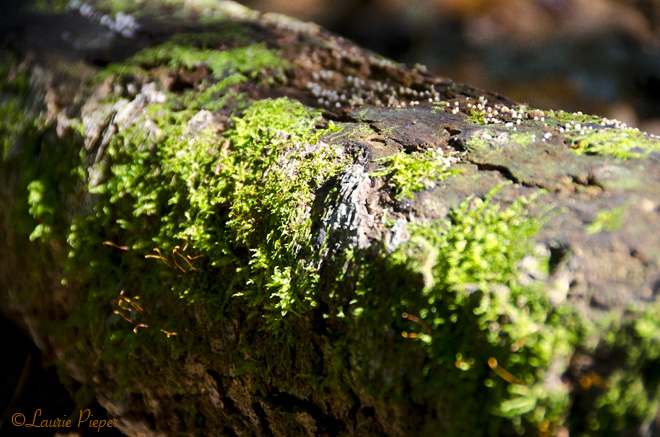
Having been back in town for a few days now, I am beginning to get caught up on my work and on my gardening. Here are a few pictures that I took this morning. By the way, that’s not a smudge on the top photo … it is a cluster of Russian Sage which can be seen in more detail at the far left in the bottom photo. Ok, so now it is back to work for me! Have a great day everyone!

This is an artistic interpretation of a photo that I took in Florida a few years ago of catfish feeding at the surface of the water. Thanks to Where’s My Backpack for the “ripple” prompt!

Have a great weekend everyone!

After working in the garden much of the day yesterday, I made Wild Daylily Gin & Tonics to celebrate the first day of summer. Here’s to summer!
Wild Daylily Gin & Tonics
The blooms in these summery cocktails are edible and are meant to be eaten. They taste like cucumbers and are easiest to eat starting from the stem end.
Gin
Tonic Water
Lemon Slices
Hemerocallis fulva Blooms (See note below.)
(1) Pick fresh Hemerocallis fulva blooms. Remove and discard the pollen covered tips from the stamens. Gently wash blooms in cold water.
(2) For each G&T, fill a tall tumbler about 3/4 full of ice. Add lemon slices. Fill about 1/3 of the way with gin then top off with tonic. Gently stir. Place a daylily in the top. Enjoy!
Note: Do not eat true lilies or use them as garnishes. True lilies – plants in the lillium family (e.g. Easter Lilies, Asiatic Lilies, Oriental Lilies, etc.) – are poisonous. Daylilies are not true lilies. Ones of the wild variety are edible, though occasionally someone is allergic to them. Hemerocallis fulva – wild daylilies – are the only daylilies recommended for eating because, given the many different hybridized cultivars out there, it is possible that some one or another could make a person sick. Wild daylilies, the tall orange ones that are often seen growing wild along the side of country roads, are edible. I grow them in my garden and use the blooms to garnish beverages and salads. I haven’t tried eating the tubers, but I have read in several places that sauteed wild daylily tubers are quite tasty.
There are a number of articles available on cooking with daylilies. Here are a few links:

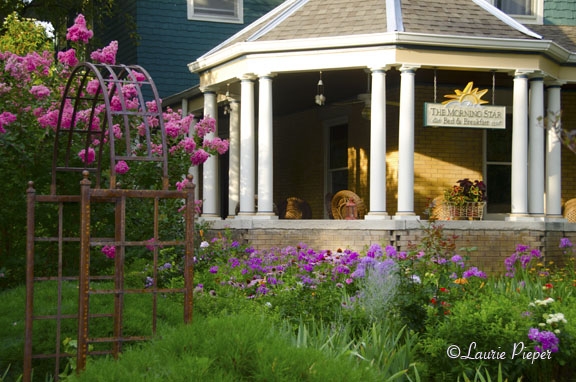
After breakfast this morning, I had fun taking photos in the garden and on our porch for this week’s Weekly Photo Challenge. Since I take so many photographs of my flowers, I decided not to include any blooms in the challenge; but I still think that these are interesting garden shots. I hope that you do too. Have a great day!
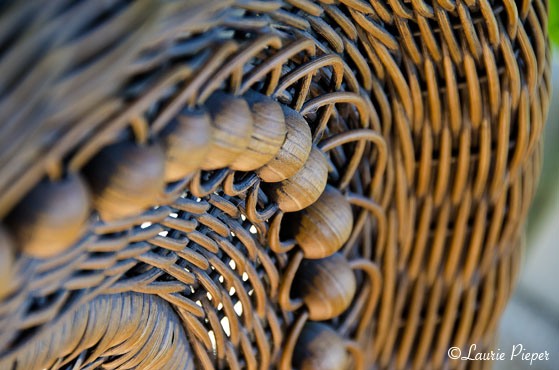
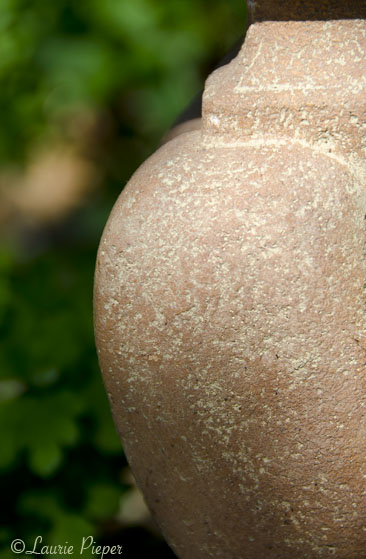


Rarely does the Daily Prompt fit my day quite so well as today. With gentle rain showers on and off this afternoon – the kind that sinks into the soil without beating up the plants – I felt like singin’ in the rain with joy for my plants and with relief that I didn’t have to drag hoses around today. Instead, I walked around in the rain and photographed my garden. I hope that you enjoy the images!


“Secret” is one of the two hybrid tea roses that I planted in the garden this Spring. It has gorgeous, large blooms, a strong perfume, and attractive dark green foliage. I think that it makes a really nice addition to the garden.
Unfortunately, both my Secret and my Royal Amethyst – my other new hybrid tea – are suffering from some sort of stress right now, which is apparent from the yellowing of the lower leaves on both bushes. Yellow leaves can be caused by a number of different factors: over or under watering, over fertilizing, wrong soil ph, disease, pests, radiant heat, inadequate sunlight, and probably some stressors of which I am not even aware.
Nevertheless, I am optimistic that both rose bushes will be fine. Since we had a recent spike in temperatures – from the 70’s to the 90’s in just a few days – I am guessing that the heat is a factor and whenever heat is a factor so is watering. So for the next few weeks, I will watch these two carefully and feel the soil beneath the surface daily to evaluate their water needs. Over the years, I have planted and cared for about 75 roses at the different places I have lived and I have only had one die. So that is a pretty good track record … but still I have my fingers crossed! I hope to be able to give you a positive update soon.
Have a lovely weekend!


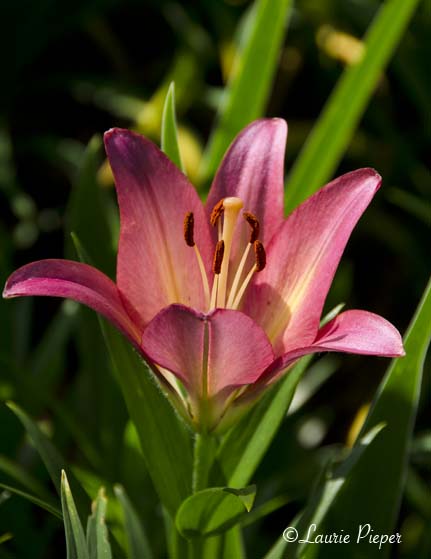
Asiatic Lily “Kiss Me Kate” – named, I assume after the Cole Porter musical – is the standout in my garden this week. I planted the “Kate” bulbs in 2000 and they are still producing beautifully every year. This year, however, we had unusually cool weather for early June – that is, until yesterday afternoon when our official temperature was 99 degrees F. As a result, I had the opportunity to observe that the blooms that opened during the cooler temperatures had much darker coloration than those that opened on warmer days. Kiss Me Kate is a bicolor lily often described as being magenta and creamy yellow. Mine are usually a mauvish-pink turning to salmon-pink at the border of the yellow centers; and just this year did I see a few that were close to red on the outer edges. I have 5 groupings of the Kates, standing at about 3 feet tall. In early morning and early evening light, the colors look like those of the sunset.



 A Taste of Morning