Lemon Midori Margarita

As I write this post, I am taking a break from preparing for a wedding to be held at the B & B this evening. I have the flowers arranged and the wedding cake layers are in the oven. Hopefully that means that all is going well. If it weren’t the case that I still have a lot of work to do and that it isn’t even yet nine in the morning, I might be tempted to have a margarita because it is Cinco de Mayo … and really it feels much later in the day than it is. But I shall wait until the festivities tonight.  It is always so exciting to host a wedding!

This is a slightly unusual margarita, being made with lemon juice instead of lime and having a touch of Midori for color and for a little extra sweet-tart flavor.

Lemon Midori Margarita

(1) Fill a cocktail shaker with crushed ice. Add 2 oz. of a reposado tequila, 1 oz. Cointreau, 1 oz. fresh squeezed lemon juice, 1 oz. Midori. Shake vigorously for one full minute.

(2) Run a slice of lemon around the edge of a margarita glass or cocktail glass. Dip glass in kosher salt or margarita salt. Fill glass with ice.

(3) Strain margarita into glass. Garnish with a wedge of lemon. Enjoy!

Growing and Cooking with Herbs

The Portia Club from Wamego came over today for a tour of the house and garden and a discussion of growing and cooking with herbs. They are a very lovely group of women to chat with.

Here are  some of the things we talked about:

(1) Using herbs in the landscape versus growing them in pots. Some herbs such as Golden Oregano make wonderful groundcovers without being invasive. Some such as Sage are attractive accent plants when in bloom. Parsley is a good plant for butterfly gardens. Anything in the mint family, however, will have a tendency to take over the garden if not harvested on a regular basis and so should be grown in pots. The pots can be placed in the ground, though, if you want to hide the pots in the landscape. Many herbs are suitable for container gardens.  Basil, Parsley, and Cilantro come to mind for potted arrangements as well as some of the fancy Sage varieties.

(2) Herbs want sun. I’ve tried growing herbs in shade to part shade. I haven’t found any that are happy with those conditions. They don’t all like heat, however. Cilantro, for example, will go to seed as soon as it gets hot. So in hot areas, late afternoon shade will help extend its growing season. Others, such as Basil, are very intolerant of cold temperatures. So don’t put basil outside when temperatures might still dip into the 40’s. Grey leaved herbs such as Sage and Lavender are more drought resistant than green leafy herbs such as basil which will need regular watering when it is hot.

(3) Overwintering of herbs.  This year I left large pots of Rosemary, Oregano, and Spearmint outside over the winter. They came back fine. It was the first winter that I have had luck doing this.  Two things were different from other years. One, of course, was that we had a milder winter – it was still definitely a winter with freezing temperatures, though. The other difference was that I had the herbs in large pots so I think that they had enough soil to give the roots a bit of insulation. Some people have luck bringing their herbs inside for the winter. Expect the herbs to go through a period of adjustment and make sure that they have enough sun if you are going to try this.

(4) Cooking with fresh herbs. When cooking with fresh herbs, the thing to remember is that they are fresh. Their fresh flavor is what you want to come across. I like to use them in cold sauces and dips – added right before serving. Their fresh flavor can also be harnessed by using them in compound butters – in a food processor blend softened butter and herbs with citrus zest, citrus juice and/or spices. Wrap tightly in plastic wrap and refrigerate. If using herbs in a cooked sauce, add them right at the end of cooking to get the best flavor.

(5) Other ways to capture flavor. The flavor of herbs can also be preserved by using them to flavor simple syrups and vinegars. (See my post, The Underrated Chive.) Simple syrup is made by heating sugar and water (either equal parts or twice as much sugar as water) until the sugar is dissolved. Herbs, such as spearmint or lemon balm, can be added during the cooking and allowed to sit in the syrup for about 20 to 30 minutes after removing from heat. They should then be strained out before the syrup is bottled. Simple syrups can be used to flavor drinks such as iced tea or cocktails or to flavor desserts. Flavored vinegars can be added to salad dressings and sauces.

(6) Drying herbs. Generally herbs should be harvested before blooming – unless it is the blooms that you are harvesting –  and before the weather starts to turn cool. The real key to drying herbs, though, is to dry them quickly so that they don’t rot before they are dried out. Herbs such as Rosemary, with a lower moisture content can be suspended in small bunches in an airy, dry space out of direct sunlight. For herbs with a higher moisture content, such as Parsley, the method with which I have had the best luck is spreading the cleaned leaves out on a large baking sheet and placing them in the oven using just the pilot light or the lowest heat until the moisture has evaporated. Then I transfer them to a zip top freezer bag and freeze. Some herbs such as chervil, however, just don’t dry well.

Happy gardening! Happy cooking!

Top photo: Sage, Rosemary & Oregano

Middle photo: Golden Oregano by Day Lilies

Bottom photo: Potted Herbs (Sage, Thyme, Oregano, Thai Basil, Tarragon)

Basements & Butterflies

A lesson that I’ve learned over the years is that the best antidote to an unpleasant experience is to do (or plan) something pleasant as soon as possible. That isn’t to say that I am always good at following my own advice; but sometimes I actually manage to.

Just before check-in yesterday,  I discovered that one of our four hot water heaters had broken and that water was running all over the southern half of our basement. After calling my husband and the plumber, I had to haul dripping wet boxes out to the back yard and mop up the mess downstairs. No fun. But afterward, I went outside to photograph the garden and found that my sage plants were covered with butterflies – at least four different kinds. The one pictured below is a Painted Lady. While I wish that the water heater hadn’t broken, taking pictures of butterflies was good stress relief; and in the end, all is well.

Cinco de Mayo Roses: A Festival of Color

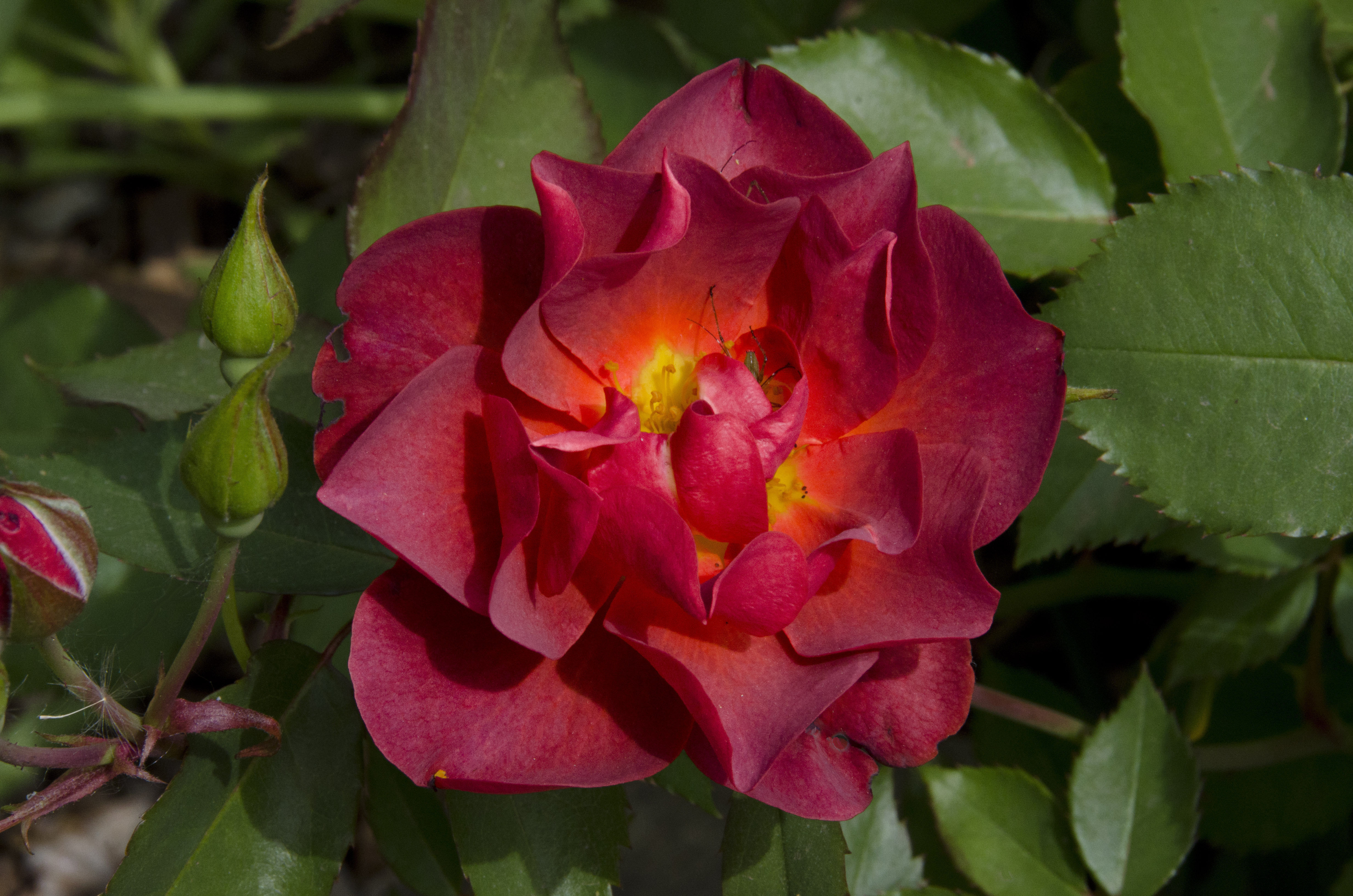
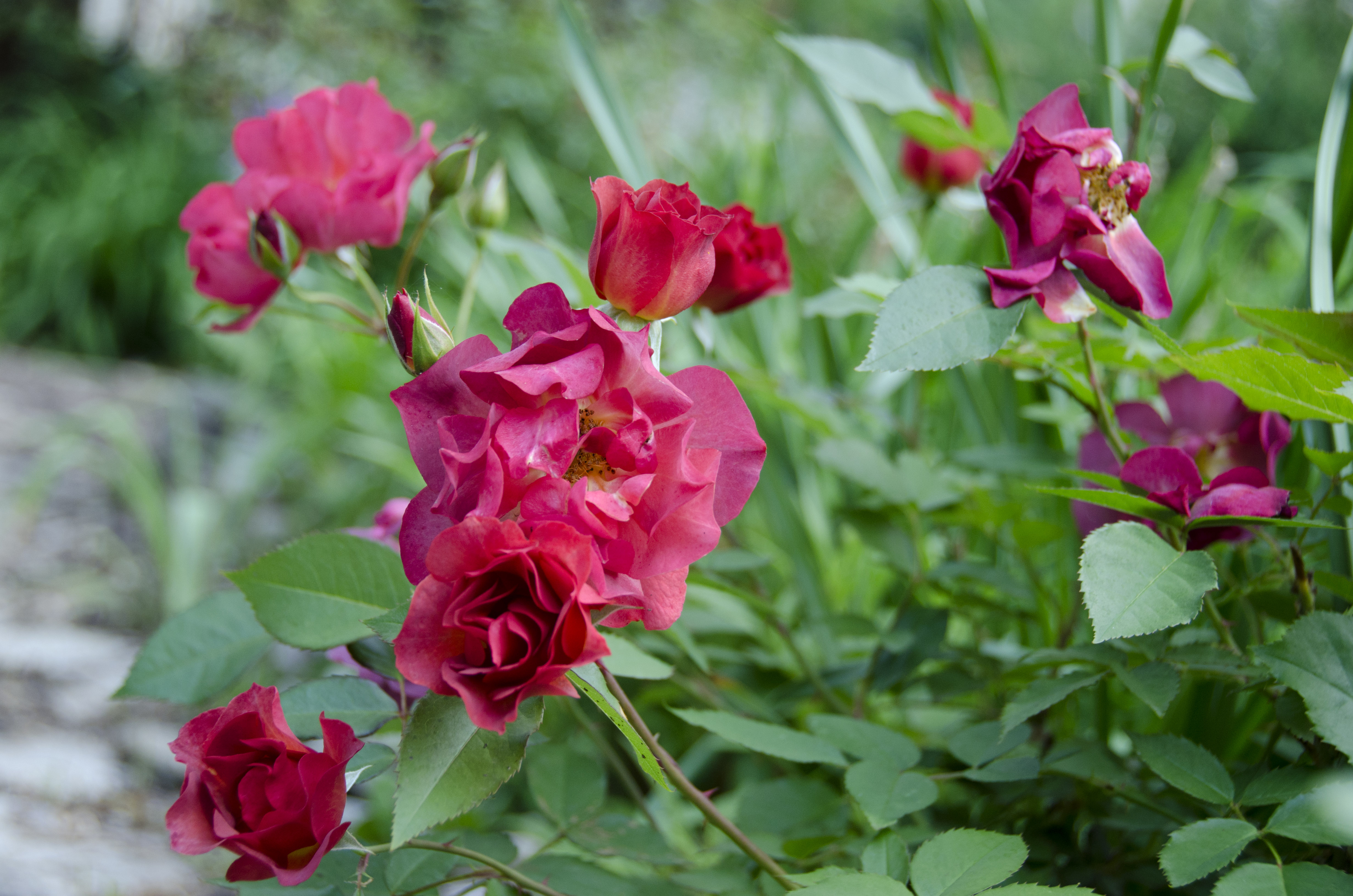
Back in the Autumn, I picked up a Cinco de Mayo Rose on whim. At our old house, where we had originally opened the bed and breakfast, I put in a rose hedge, a rose bed, and some landscape roses. In total, I had around 60 rose bushes, give or take. For various reasons I had decided not to attempt to reproduce that garden when we moved the B & B to this house 12 years ago and instead came up with a completely different garden design. But at times, I found that the three ground cover roses that I planted here just weren’t filling my rosy desires; and here and there, now and then, I’ve had to add more specimens from the genus rosa. Cinco de Mayo was one such planting. I am now seeing it in bloom after its first winter and so far think that it is a very nice addition to my growing collection. The blooms range from a deep purplish-red to coral-pink. Depending on the light, they can look completely different at different times of the day and the color is more intense in cooler weather and when the blooms are new, becoming less saturated in color but no less attractive on warmer days and as the blooms age. One review that I read described the blooms of this All American Rose Selection as “mysterious”.  Roses and Other Gardening Joys has a fun post on Cinco de Mayo as well. Ah, so nice to have roses!

Counting Down to Cinco de Mayo: Shrimp Tacos

Tacos don’t have to be just ground beef and shredded lettuce. There are so many yummy fillings that can go in a taco to make a casual yet delicious meal.  On a gorgeous evening, we love to sit outside and eat shrimp tacos … while drinking margaritas, of course!

Shrimp Tacos

1/2 c. cooked fresh corn kernels

1/2 c. chopped cherry tomatoes

1/3 c. diced orange bell pepper (or other sweet pepper)

1/4 jalapeno pepper, diced

1 T. fresh lime juice

1 T. olive oil

1 lb. raw shrimp, cleaned and shelled

1 clove garlic, minced

1/4 t. ground cumin

1/4 t. ground chipotle

8 fresh corn tortillas

shredded cheese.

(1) Toss together corn, tomatoes, orange bell pepper, jalapeno pepper (optional), and lime juice. Salt and pepper to taste. Set aside.

(2) Preheat a large skillet over medium heat. Add olive oil, shrimp, garlic, cumin and chipotle. Cook, stirring occasionally, just until the shrimp are about two-thirds cooked. Add reserved corn mixture to the skillet. Stir to combine ingredients. Continue cooking until shrimp are fully cooked.

(3) While shrimp finish cooking, warm tortillas. When shrimp are done, place two tortillas on each plate. Top with shrimp mixture then with shredded cheese. Serve right away.