Summer’s End

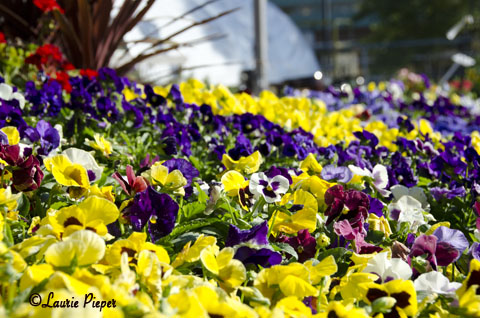
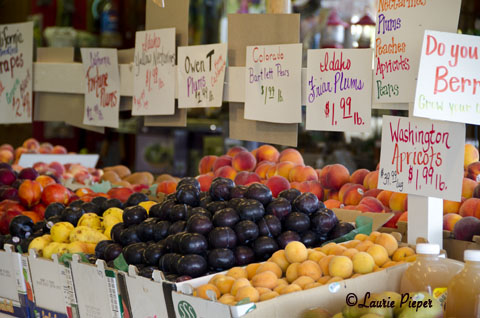
Though we are stilling having temperatures in the 90’s, and though there are nearly three weeks left to summer, the change of seasons is in the air. This was apparent to me when I was at Eastside Market yesterday … so much so that I just had to take some pictures to document the moment when I noticed autumn’s approach.

Thank you to the gracious folks at East Side Market for letting me take photographs.

What I Had Missed

I took the pictures below at Natural Stone Bridge and Caves in Pottersville, NY. (In the second photo, note the size of the person on the right side of the entrance to the cave.) This beautifully scenic attraction is just about 10 miles from where I spent the summers of my youth and I only recently visited it for the first time. It makes me wonder what else I might have missed and, of course, what am I should really get out to see near where I live now. Next post … back to Kansas!

Trail to Gull Pond

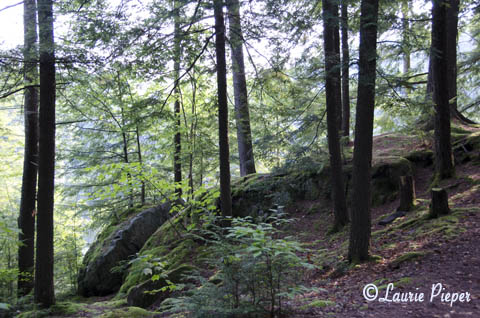
If you can bear vacation pics for a few more days, I still have photos from my recent trip to the Adirondacks that I would love to share. These are from the scenic Trail to Gull Pond in the Pharoah Lake  Wilderness Area.

A Morning Walk

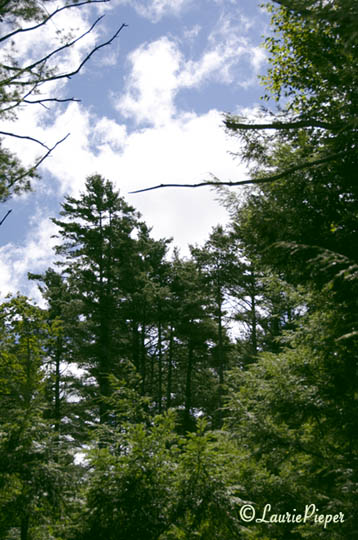
One of my favorite things to do when I visit my mother in the Adirondacks is to go for a walk. The air is blended with the wonderful scents of the mountains and the view, of course, is beautiful. The photos below are from one of my perambulations.

Look at the View!

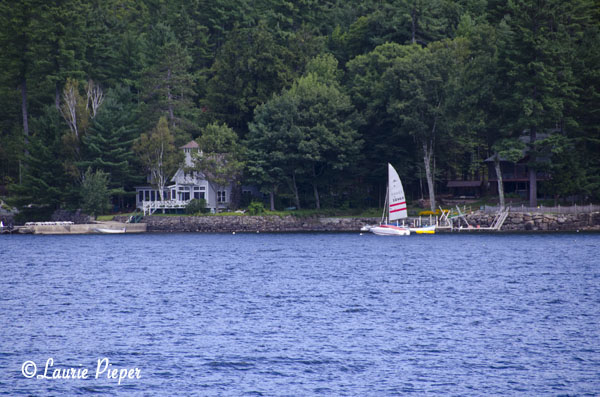
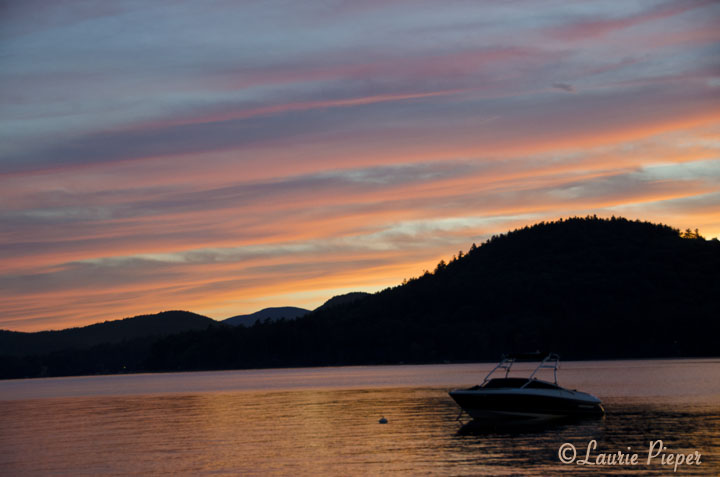
My mother lives in a beautiful location in the Adirondack Mountains of upstate New York. The gorgeous scenery prompts her to exclaim, “look at the view!” whenever she has company – something we in the family love to tease her about. During a recent visit, I took these photos from her beach. Indeed, it is a lovely view … in any direction, any time of the day.

Thank Goodness for Rudbeckia

Thank goodness for Rudbeckia fulgida “Golsturm”, commonly known as Black-eyed Susans. Rudbeckia is one of the few plantings in my garden that doesn’t seem to be struggling with the weather. Despite the fact that we’ve been watering every day, a number of our plants are showing severe signs of heat stress. I suspect that some of them will need to be replaced next Spring. We lost a tree and several shrubs after last summer’s heat. Every now and then I toy with the idea taking the Rudbeckia out of my garden because it is an odd companion for my roses and Asiatic lilies; but then when midsummer heat sets in – and it is extreme again this year – I am so glad that better judgement prevailed and that the sunny faces of  my Black-eyed Susans are still out there to cheer everyone who walks by. As I write this at almost 5 pm, our official temperature in Manhattan, Kansas is 109 degrees F. The thermometer in our yard is reading 112. In the last month, we’ve had 24 days with a high of 100 or over and we’re about 8″ behind in rain for the months of June and July. There is a 40% chance of precipitation for tonight, however, so everyone has their fingers crossed for rain this evening and a cooler day tomorrow. It would surely make the garden happy if that were to happen.

So You Think Kansas Is Flat?

So you think Kansas is flat? Okay … most of the state is. But not the Konza Prairie which is located in the northern Flint Hills of eastern-central Kansas.  This narrow chain of hills counts as its own ecoregion because it is home to the densest remaining tall grass prairie in North America. Early European settlers, unable to plow the area due to its rocky soil composition, used the region for grazing livestock thus leaving the grasslands intact. Due to dry conditions this summer, the grasses probably will not reach their full height. Nevertheless, this expanse of prairie with its soft, rolling hills is still something to see … and it proves that Kansas isn’t all flat!

The Konza Prairie is co-owned by The Nature Conservancy and Kansas State University. While much of the area is dedicated for use as a biological research station, fortunately there are several trails open to the public. The trails are frequently used by hikers and joggers, birders, and photographers and other artists out to capture the beauty of this land. If you have been following my blog this week, you’ve probably figured out how much I enjoy photographing this area. (I’ve also done a few paintings of the prairie.) However, my next post will be back to food.

Compass Plants on the Konza

Compass Plant (Silphilium Laciniatum) is a wild flower native to the prairies of the midwestern US. It also grows in parts of northeast to central US and southeastern Canada. It derives its name from the fact that its leaves align themselves north-south to avoid over-exposure to the parching sun. Despite the abnormally hot, dry conditions that we have been experiencing in Kansas* – the driest in over 50 years, when I photographed them a few days ago these Compass Plants gave all appearances of thriving on the Konza Prairie. I find them to be a fascinating combination of beauty and ruggedness.

*Our official high yesterday was 107 degrees F., though the thermometer in our yard registered a high of 113.2 degrees F. at 4:20 pm. A thunderstorm last night brought only 0.07 inches of rain.

Konza Sunrise

This is my 100th post. Today’s photos are of dawn and sunrise over the Konza Prairie. From my first draft, I had to heavily cut back on the number of photos. Looking at a dozen shots of sunrise  all in one post seemed like it was going to be a bit much. One thing that is interesting about being on the Konza at sunrise, is that it seems as though one gets to see the sun come up again and again as one crosses hilltops, goes down into valleys and around bends. I’ll be posting more prairie photos throughout the week.

Hydrangeas Living on the Edge

At the edge of our next door neighbor’s property, just touching ours, are two hydrangeas. Jean – a previous owner of that property  and the woman who planted these bushes – told me that they are Nikko Blues.*  To show their intended color, Nikko Blues require applications of acidic fertilizer when they are grown in alkaline soils such as we have in Kansas. Unless the ph of the soil is lowered, the color of Nikko Blues is unstable, ranging all the way over to dark pink. No one fertilizes the bushes next door anymore. Nevertheless, they have a beauty of their own. Unlike their showy true blue relations, these are subtle and sweet-looking, blooming away in the shade. The photos below are ones that I took yesterday. They are all of flower clusters on the same bush.

* To be honest, I am not certain that these are Nikko Blue Hydrangea bushes, though I am inclined to trust Jean. I have been reading up on the subject on hydrangea identification and am thoroughly confused. These are most definitely not Oakleaf, Lacecap or Annabelle Hydrangeas – which leaves Mopheads and Paniculatas. (Nikko Blues are Mopheads.) The leaf formation rules out the Paniculata family; but the flowers open white and then turn a pale pink or blue, which would seem to rule out the Mophead family. Plus they don’t seem to have a full “mophead” – though I suppose this could be due to growing conditions. If anyone has any thoughts on identifying these bushes, I would be happy to know them. We have 6 hydrangeas in our yard, but I don’t consider myself an expert hydrangeas at large. Whether Nikko Blues or something else, I am always happy to see these bushes in bloom.