Wine in the Wild

Some friends and I went to Wine in the Wild last evening. Wine in the Wild is an annual fundraiser for Sunset Zoo, which is about two miles from The Morning Star. It is the first time that I have been to this event. With the B&B, it is often difficult to g0 out for an evening; but I have been working on getting out to see more of what is going on in town. We had a lovely, relaxing evening, strolling around the zoo and sipping wine.

Sunset Zoo has an interesting history. In 1929 the City of Manhattan purchased a hilltop expanse of land for a cemetery. A large area of that land was too rocky for digging graves and in 1933 was dedicated to become Sunset Zoological Park. This, of course, was during the Great Depression, and original funding for the park was provided by the WPA. Even though the zoo has been modernized over the decades, extensive stone walls and walkways built by WPA workers still form an attractive part of  its hardscaping. The zoo has a working relationship with Kansas State School of Veterinary Medicine and is home to over 300 species of animals.

Below are some of the pictures that I took last night. It was hot and bright out when the event started at 7, cooler and pitch black when it ended a little after 9. Many of the animals seemed to be sleeping, but the birds put on a good showing.

Miniature Roses: A Gift for the Garden

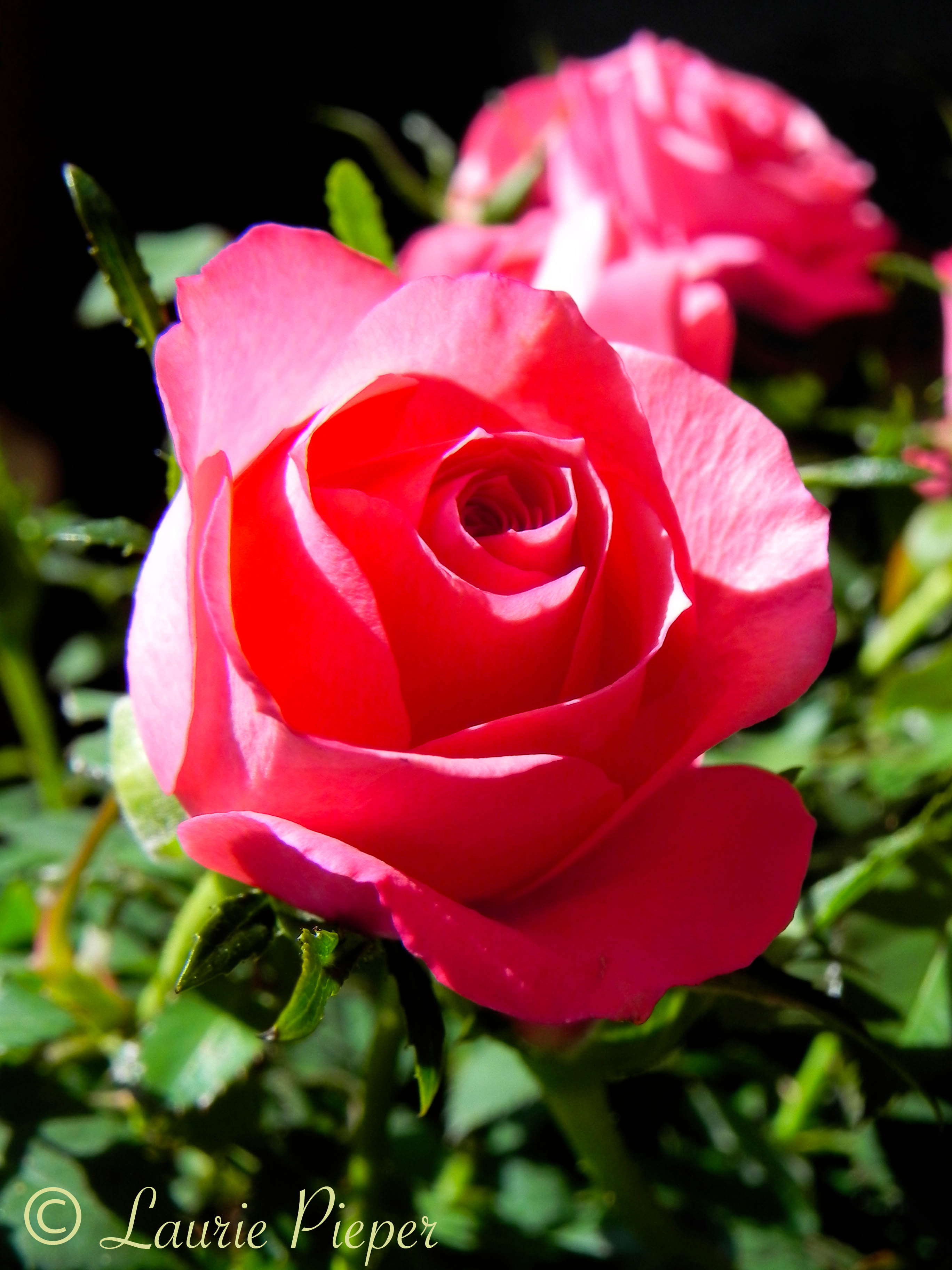
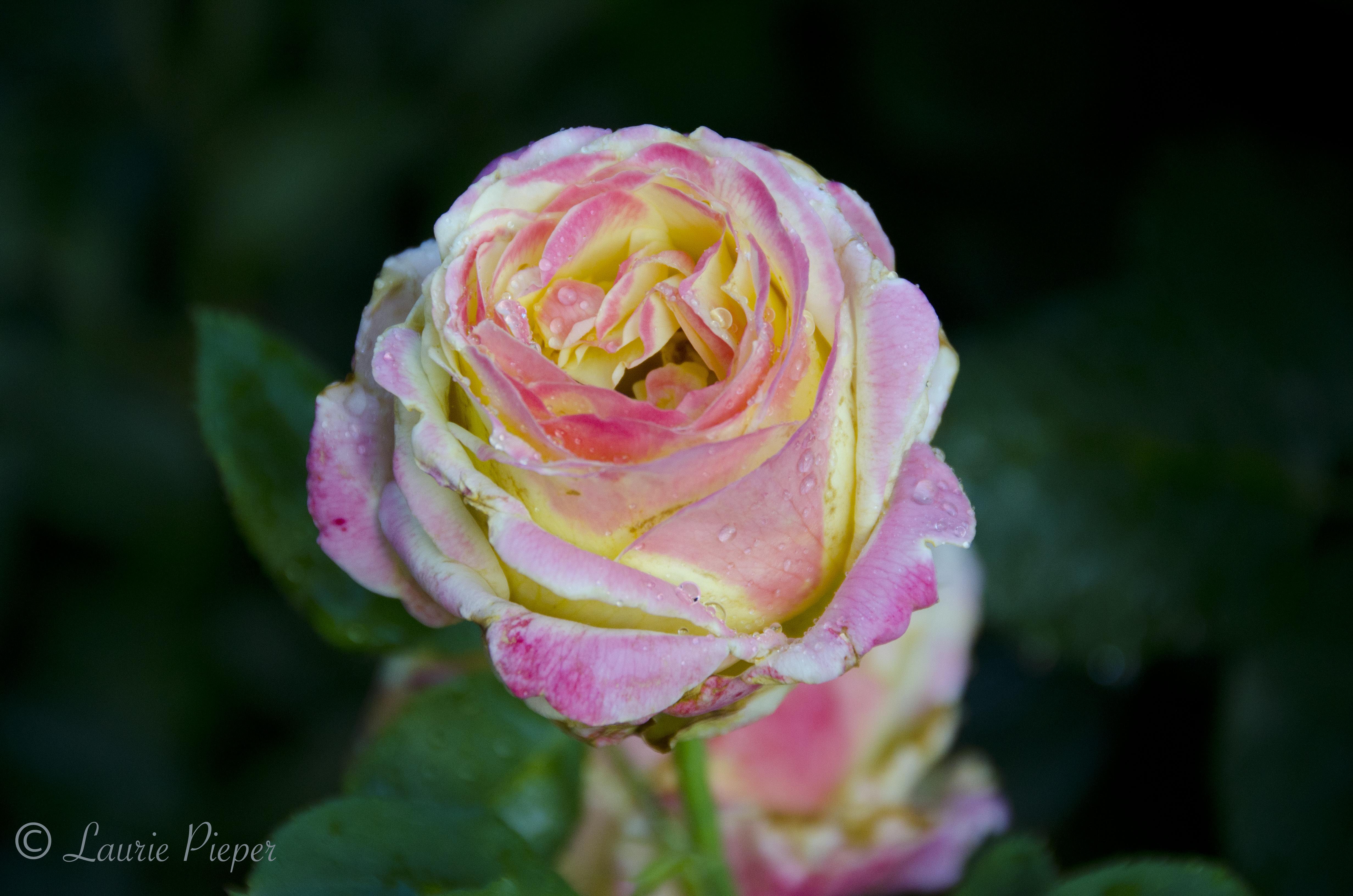
To many, it will come as no surprise that I love roses. However, I am not a rose snob.  I love large, elegant, fragrant blooms and can chat away about this and that variety. When I go to a garden center, I have to examine every rose bush and ask all sorts of questions about the growth habits of each variety before I can bring one home. But I also have a penchant for buying those little potted rose plants with the tiny, highly structured flowers  that sell in grocery stores for a few bucks around the holidays – a gift for my garden. When I buy them over the winter, I keep them alive inside until I can plant them outdoors in the Spring; and, they have turned out to be surprisingly winter hardy for Kansas. My oldest few have been in the garden for four years now. I have around a dozen grocery-store-bought miniature rose bushes in the garden, give or take, ranging from the most delicate pink to bright coral. I don’t know their names, but that doesn’t matter. What’s in a name?

Per Request: One More Photo of Seven Dolors

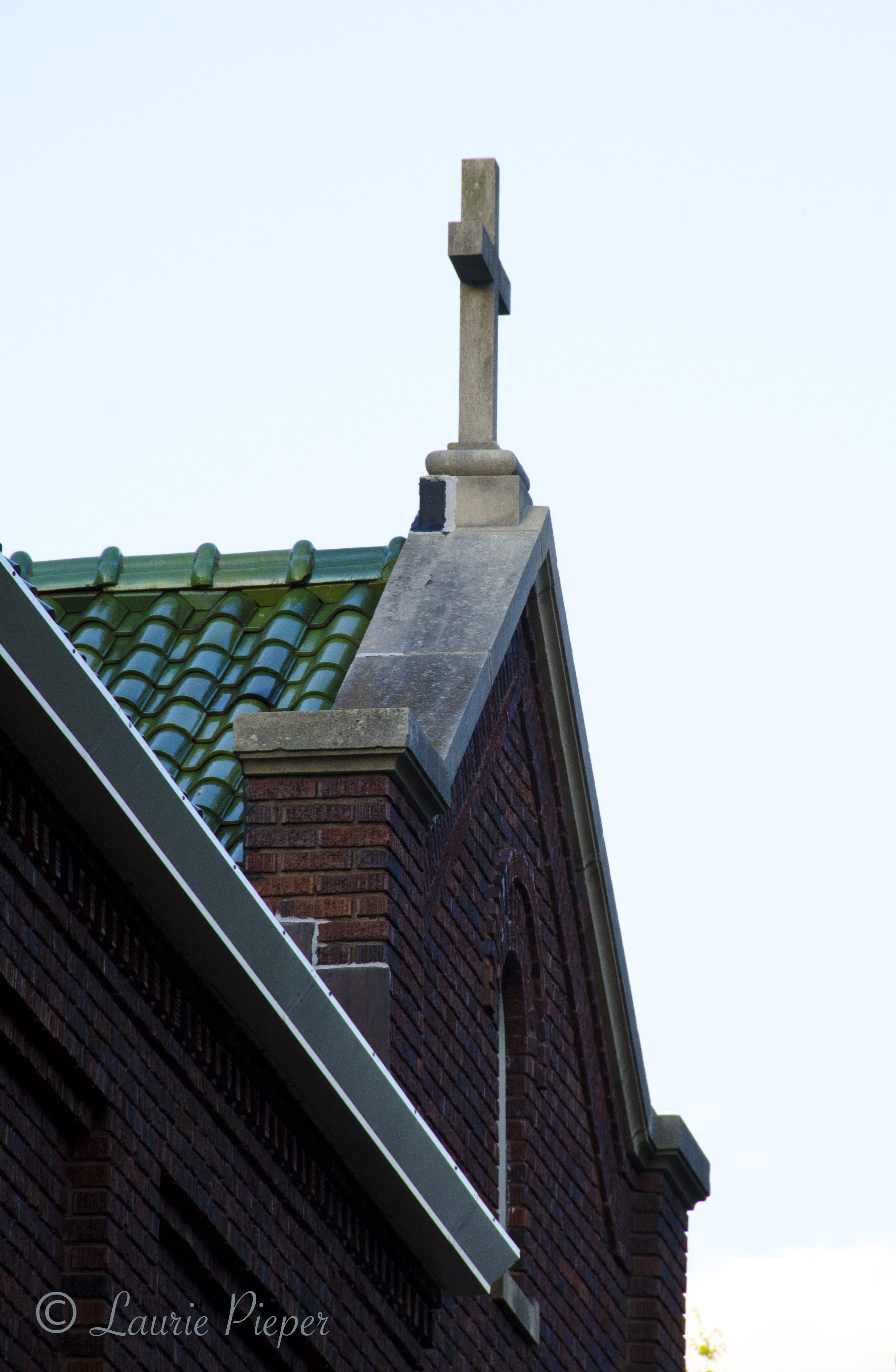
Per request by Paul Golding, here’s a photo of the front of Seven Dolors. What a lovely church! Thanks for the request, Paul! I’ll don’t think that I’ll get tired of taking pictures of Seven Dolors anytime soon.

The James W. Berry Memorial Rose Garden, Manhattan City Park

Manhattan City Park is only a few blocks from the Bed & Breakfast and I’ve been wanting to get over there to see the Rose Garden for a few weeks now. With yesterday morning’s breakfast starting late, I was able to dash over to the park for some pictures about 45 minutes after sunrise. It’s hard to believe, but I actually got there too early as the sun was blocked by trees and I had to wait for it to get a little higher in the sky before any of the flowers were in the sun. I did get some nice pictures of the roses and the fountain, but was not able to stay for as long as I would have liked.

The Rose Garden was started in the 1920’s by Mr. Berry, an 1883 graduate of what was then Kansas State Agricultural College (now Kansas State University). He was a member of the Kiwanis Club which was instrumental in tending to and funding the garden in the early years. The garden served in part as a demonstration plot to show that roses could be grown in Kansas. Boy can they!

The fountain was originally put in City Park in 1895 and was moved to the Rose Garden in 1986. Whenever I study the fountain, I am delighted by the detailed workmanship and wonder if there is still anyone around who does such work.

Paul Scarlett Rose on Arbor

Tropicana Rose

Olympiad Rose

Bella Roma Rose

Fountain Detail

Mint: It Grows Like a Weed, but That’s Okay

Herbs in the mint family are known to be so invasive that it is generally recommended that they be grown in pots rather than directly in the ground. A few years ago,  I started a couple of large pots of spearmint by the back steps. I still have those pots of mint. Kansas winters can’t kill them off, but grasshoppers can do some damage.  While the leaves are still pristine, having not yet been gnawed upon by the voracious grasshoppers that seem to plague my garden during the summer and are already appearing, I’ve decided to harvest some of the mint. So I have been thinking of its culinary uses. (In the post immediately following this I give a cocktail recipe that I created for using homemade mint products.)

Tip: To harvest mint, make sure that it has been well watered for several weeks prior to cutting. Cut mint in the morning before the heat of the day has started to set in and, preferably, cut only stems of mint that have not yet started to flower. Clean with cold water. Use only undamaged leaves.

Uses

(1) Mint Tea

Place a large quantity of leaves in a teapot. Pour fresh boiling water over leaves and let steep for about 5 minutes. Strain to serve. Variations: add lemon balm leaves, chamomile flowers, black or green tea leaves, orange or lemon peel, and so forth.

(2) Mint Simple Syrup

Add 1 cup cold water and 1 cup granulated white sugar to a non-stick pot. Heat, stirring frequently, until the sugar is dissolved. (No need to simmer.) Place 2 c. mint leaves in a large glass bowl. Carefully pour simple syrup over mint and allow to sit for 5 to 15 minutes. Squeeze juice from leaves into syrup. Stain into syrup into a glass jar.

Use in cocktails such as Mint Juleps or Mojitos.  Use to sweeten lemonade or  to sweeten black or herbal teas  (hot or iced). Toss a small amount with fresh fruit such as honeydew or grapefruit segments for a minty fruit salad.

(3) Mint-Infused Vodka or Rum/Mint Extract

Fill a glass jar with fresh mint and top off with vodka or white rum. Cover tightly and shake. To make infused-vodka, store in the refrigerator for 24 hours. Strain out mint leaves and pour vodka into a glass bottle. To make extract, allow the mint leaves to sit in the vodka for 2 weeks before straining. While the mixture is sitting for the 2 weeks, remove any leaves that float to the top and turn brown.

Use vodka or rum in cocktails. Use extract in brownies, cookies, or whipped cream.

(4) Dried Mint Leaves

Hang bunch of leaves on stems 4 – 5″ long and hang in a warm, dry place or dry leaves in an oven or food dehydrator.

Use for teas or  in middle Eastern and far Eastern dishes.

That’s all that I came up with for today. What are your favorite ways to use mint, whether spearmint or some other variety? I’d love to hear your suggestions.

A Revelation at Seven Dolors Church

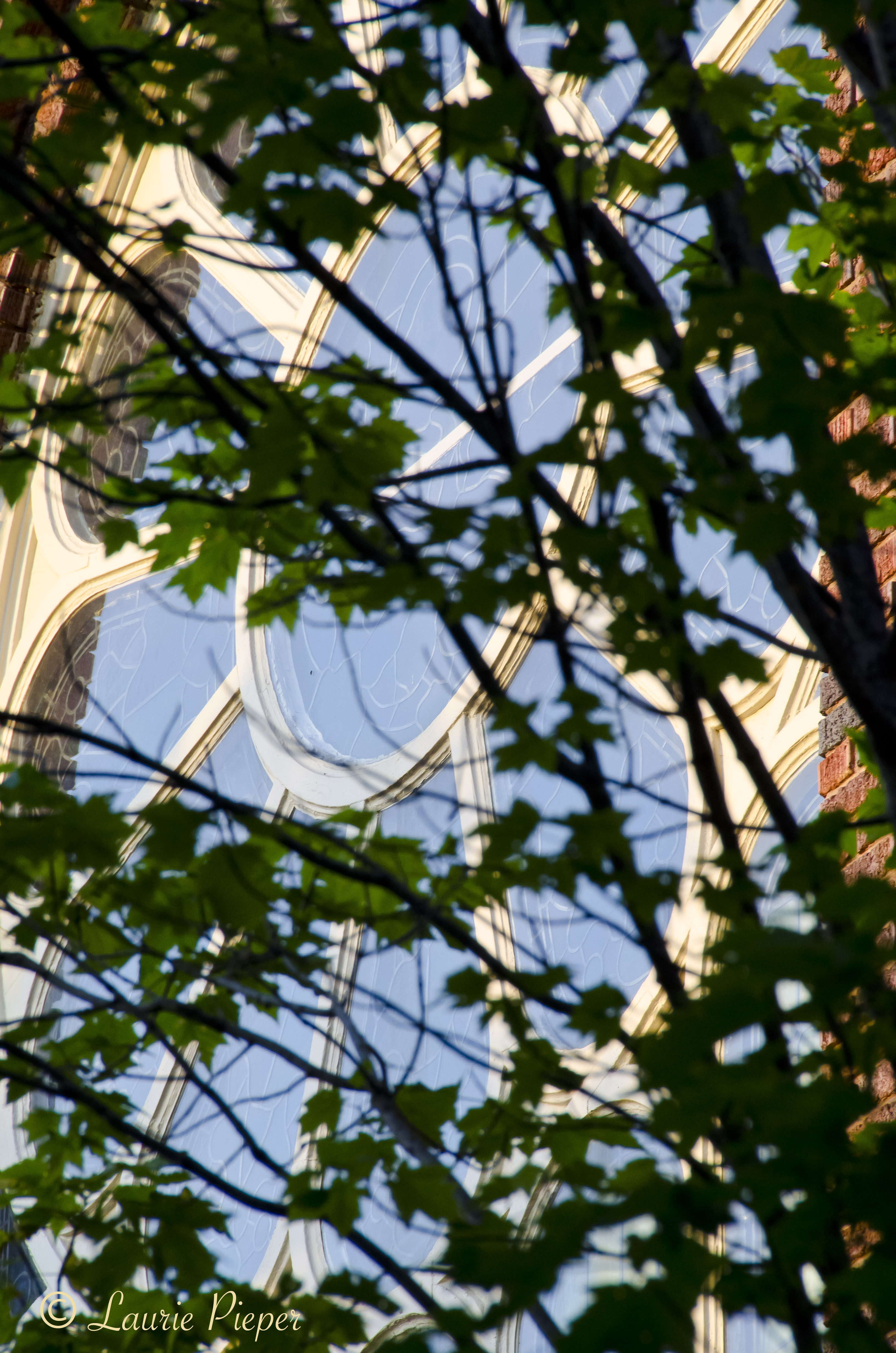
For the twelve years that we have lived behind Seven Dolors, I’ve been trying to get the perfect picture of this historic church. Last evening, I waited until the sun was low and then I ran out and got in position with my camera. And after all these years, I finally had a revelation … well make that two: (1) I needed to stop trying to get a picture of the church because the pictures in which I tried to fit in as much as possible were all boring and (2)  I needed to stop trying to get the perfect picture because I should consider any picture that says what I want it to say as a perfect picture. So I tried to photograph those features that draw my eye to Seven Dolors over and over. I tried to capture a bit of what is beautiful and moving about this church. Here are a few of my results from last night. Something tells me that I’ll be photographing Seven Dolors for years to come.

Putting on the Purple: Life in a College Town

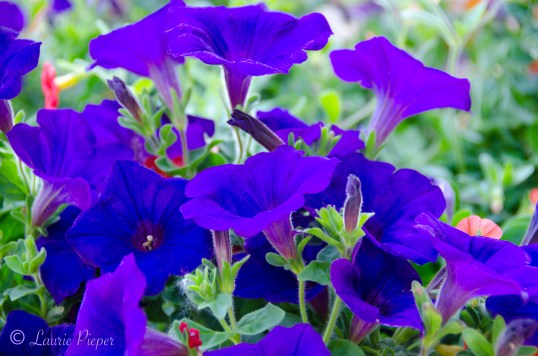
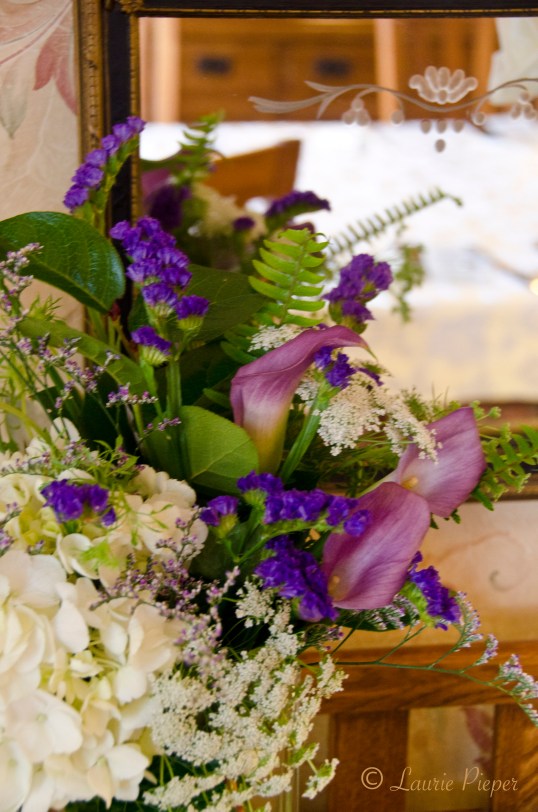
Manhattan, Kansas is a college town of about 50,000 residents. If anything can be said of Manhattanites it is that they believe in the adage “be true to your school.” Around The Little Apple this is demonstrated by wearing and displaying the colors of Kansas State University: royal purple and white. With a house full of graduation-goers this weekend, I’ve been finding ways to play on the purple and white theme. To all the graduates out there, we at The Morning Star congratulate you and wish you happiness and success!

For the Love of Old Houses

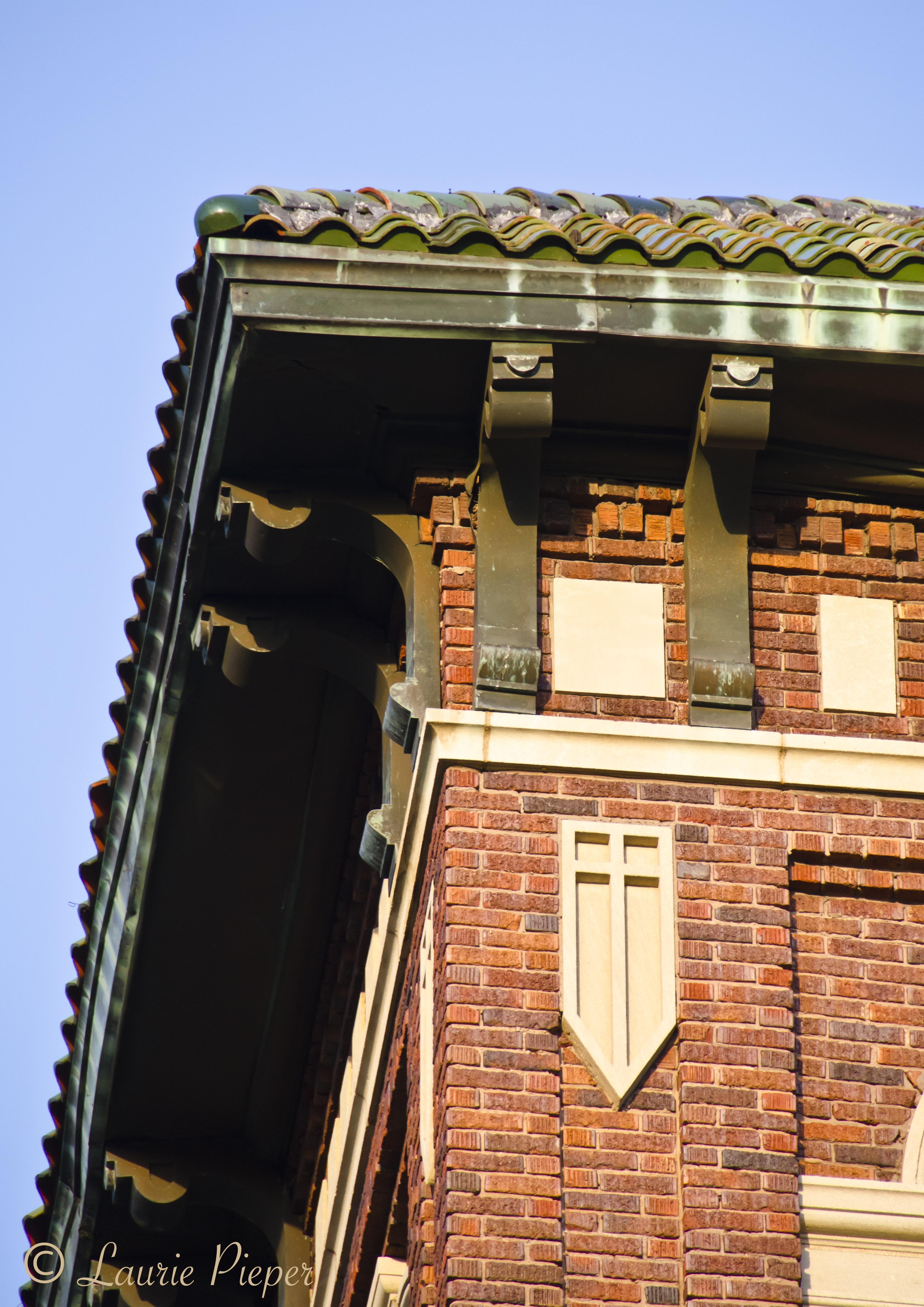
Our house was built in 1902. Its architectural style is Queen Anne transitional and it has many lovely features that one doesn’t often see in modern homes. One of the comments that we frequently hear around the B & B is “Boy with an old house like this, you sure must have a lot of work to do.”  We do have quite a list of work that we’ve done, or had done, to the house in the years that we have owned it. But the list isn’t long just because the house is old. A number of the repairs are ones that a anything except a brand new house could potentially require. (See my post “Basements and Butterflies.”)  All houses require maintenance and ours happens to be a big house with interesting architectural details which we would like to preserve.  So in a way, I guess, that does come back around to the age of the house.

Our contractor, Russ, employs a euphemism which we dread hearing  … “deferred maintenance.” That is when a home owner doesn’t stay on top of repairs and something that could have been a smaller job turns into a bigger and hence more expensive one. So when my husband recently discovered water coming through the porch roof between two of the columns, I got on the phone to Russ. Russ sent brother Tim over who told me that they were going to have to prop up the porch roof and pull several columns so that they could remove and replace the damaged boards. I didn’t like the image that conjured up. I had visions of broken columns and  layers of rotten wood. The wrap around porch with its columns and its varnished wood ceiling is one of our favorite features of our house and I didn’t want anything bad happening to it. Russ and Tim and the guys have always done good work for us, though, so I did my best to put my worries aside.

We chose a sunny day when there weren’t any guests around the house as the best time to have the work done. Once the guys to started, they had the roof secured and the columns pulled  out in almost no time. And violà the house was still standing. Thanks to Bill’s observant eyes, and to our trusty contractor, we caught the damage before it had gone very far; and everything has been fixed. They were able to do all of the repairs yesterday and today painting is all that needs to be done.

 The culprit in all of this  — improper gutter installation. The gutters didn’t have the appropriate backing where they wrapped around some of the porch’s corners. They looked fine from the front. We just had no idea what was behind them. So you can guess what is next on our list. But if you own an old home like ours, you’ve got to love it and that means giving it some t.l.c.

Pulling Out Columns

Getting Ready to Paint

Growing and Cooking with Herbs

The Portia Club from Wamego came over today for a tour of the house and garden and a discussion of growing and cooking with herbs. They are a very lovely group of women to chat with.

Here are  some of the things we talked about:

(1) Using herbs in the landscape versus growing them in pots. Some herbs such as Golden Oregano make wonderful groundcovers without being invasive. Some such as Sage are attractive accent plants when in bloom. Parsley is a good plant for butterfly gardens. Anything in the mint family, however, will have a tendency to take over the garden if not harvested on a regular basis and so should be grown in pots. The pots can be placed in the ground, though, if you want to hide the pots in the landscape. Many herbs are suitable for container gardens.  Basil, Parsley, and Cilantro come to mind for potted arrangements as well as some of the fancy Sage varieties.

(2) Herbs want sun. I’ve tried growing herbs in shade to part shade. I haven’t found any that are happy with those conditions. They don’t all like heat, however. Cilantro, for example, will go to seed as soon as it gets hot. So in hot areas, late afternoon shade will help extend its growing season. Others, such as Basil, are very intolerant of cold temperatures. So don’t put basil outside when temperatures might still dip into the 40’s. Grey leaved herbs such as Sage and Lavender are more drought resistant than green leafy herbs such as basil which will need regular watering when it is hot.

(3) Overwintering of herbs.  This year I left large pots of Rosemary, Oregano, and Spearmint outside over the winter. They came back fine. It was the first winter that I have had luck doing this.  Two things were different from other years. One, of course, was that we had a milder winter – it was still definitely a winter with freezing temperatures, though. The other difference was that I had the herbs in large pots so I think that they had enough soil to give the roots a bit of insulation. Some people have luck bringing their herbs inside for the winter. Expect the herbs to go through a period of adjustment and make sure that they have enough sun if you are going to try this.

(4) Cooking with fresh herbs. When cooking with fresh herbs, the thing to remember is that they are fresh. Their fresh flavor is what you want to come across. I like to use them in cold sauces and dips – added right before serving. Their fresh flavor can also be harnessed by using them in compound butters – in a food processor blend softened butter and herbs with citrus zest, citrus juice and/or spices. Wrap tightly in plastic wrap and refrigerate. If using herbs in a cooked sauce, add them right at the end of cooking to get the best flavor.

(5) Other ways to capture flavor. The flavor of herbs can also be preserved by using them to flavor simple syrups and vinegars. (See my post, The Underrated Chive.) Simple syrup is made by heating sugar and water (either equal parts or twice as much sugar as water) until the sugar is dissolved. Herbs, such as spearmint or lemon balm, can be added during the cooking and allowed to sit in the syrup for about 20 to 30 minutes after removing from heat. They should then be strained out before the syrup is bottled. Simple syrups can be used to flavor drinks such as iced tea or cocktails or to flavor desserts. Flavored vinegars can be added to salad dressings and sauces.

(6) Drying herbs. Generally herbs should be harvested before blooming – unless it is the blooms that you are harvesting –  and before the weather starts to turn cool. The real key to drying herbs, though, is to dry them quickly so that they don’t rot before they are dried out. Herbs such as Rosemary, with a lower moisture content can be suspended in small bunches in an airy, dry space out of direct sunlight. For herbs with a higher moisture content, such as Parsley, the method with which I have had the best luck is spreading the cleaned leaves out on a large baking sheet and placing them in the oven using just the pilot light or the lowest heat until the moisture has evaporated. Then I transfer them to a zip top freezer bag and freeze. Some herbs such as chervil, however, just don’t dry well.

Happy gardening! Happy cooking!

Top photo: Sage, Rosemary & Oregano

Middle photo: Golden Oregano by Day Lilies

Bottom photo: Potted Herbs (Sage, Thyme, Oregano, Thai Basil, Tarragon)

Basements & Butterflies

A lesson that I’ve learned over the years is that the best antidote to an unpleasant experience is to do (or plan) something pleasant as soon as possible. That isn’t to say that I am always good at following my own advice; but sometimes I actually manage to.

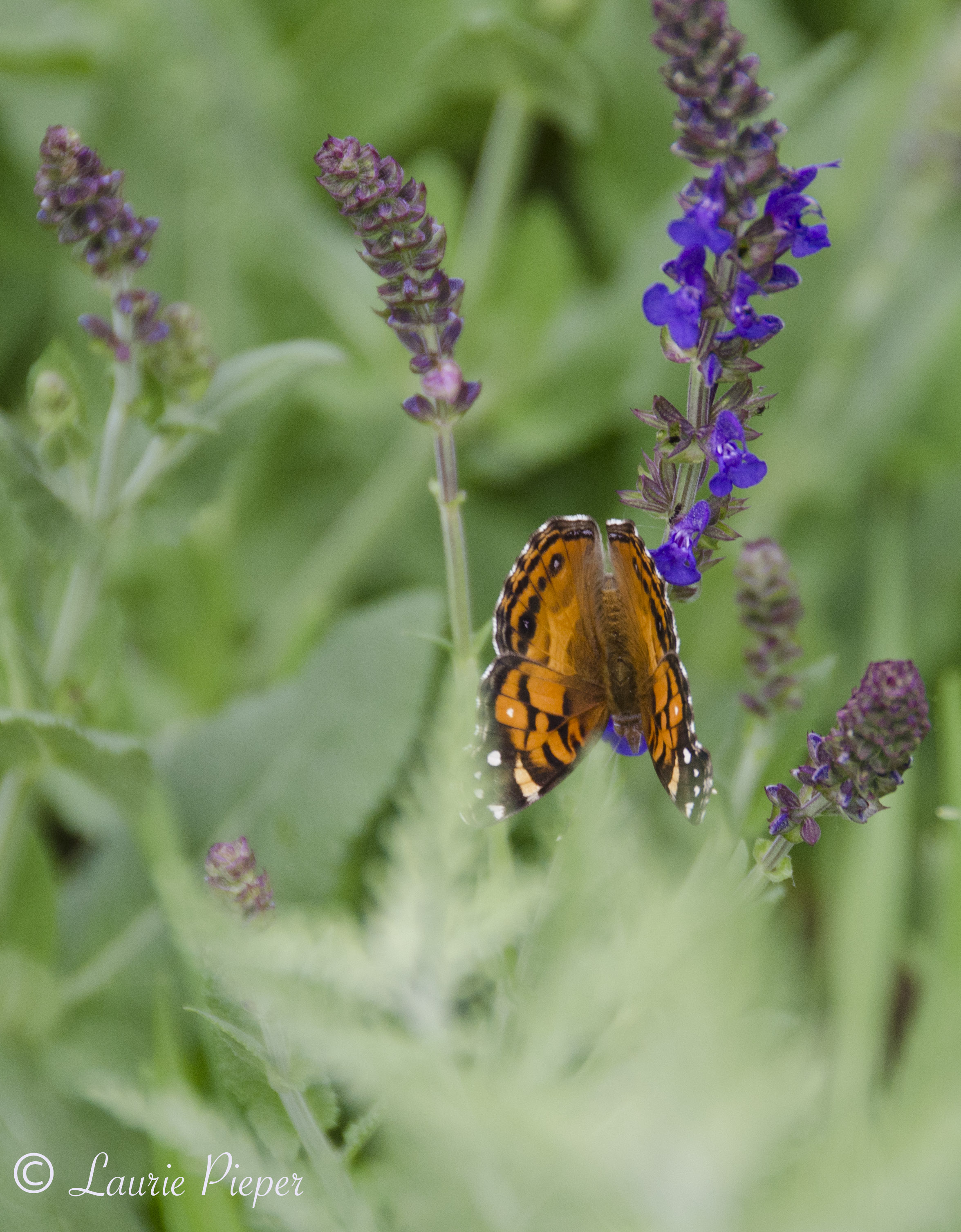
Just before check-in yesterday,  I discovered that one of our four hot water heaters had broken and that water was running all over the southern half of our basement. After calling my husband and the plumber, I had to haul dripping wet boxes out to the back yard and mop up the mess downstairs. No fun. But afterward, I went outside to photograph the garden and found that my sage plants were covered with butterflies – at least four different kinds. The one pictured below is a Painted Lady. While I wish that the water heater hadn’t broken, taking pictures of butterflies was good stress relief; and in the end, all is well.